
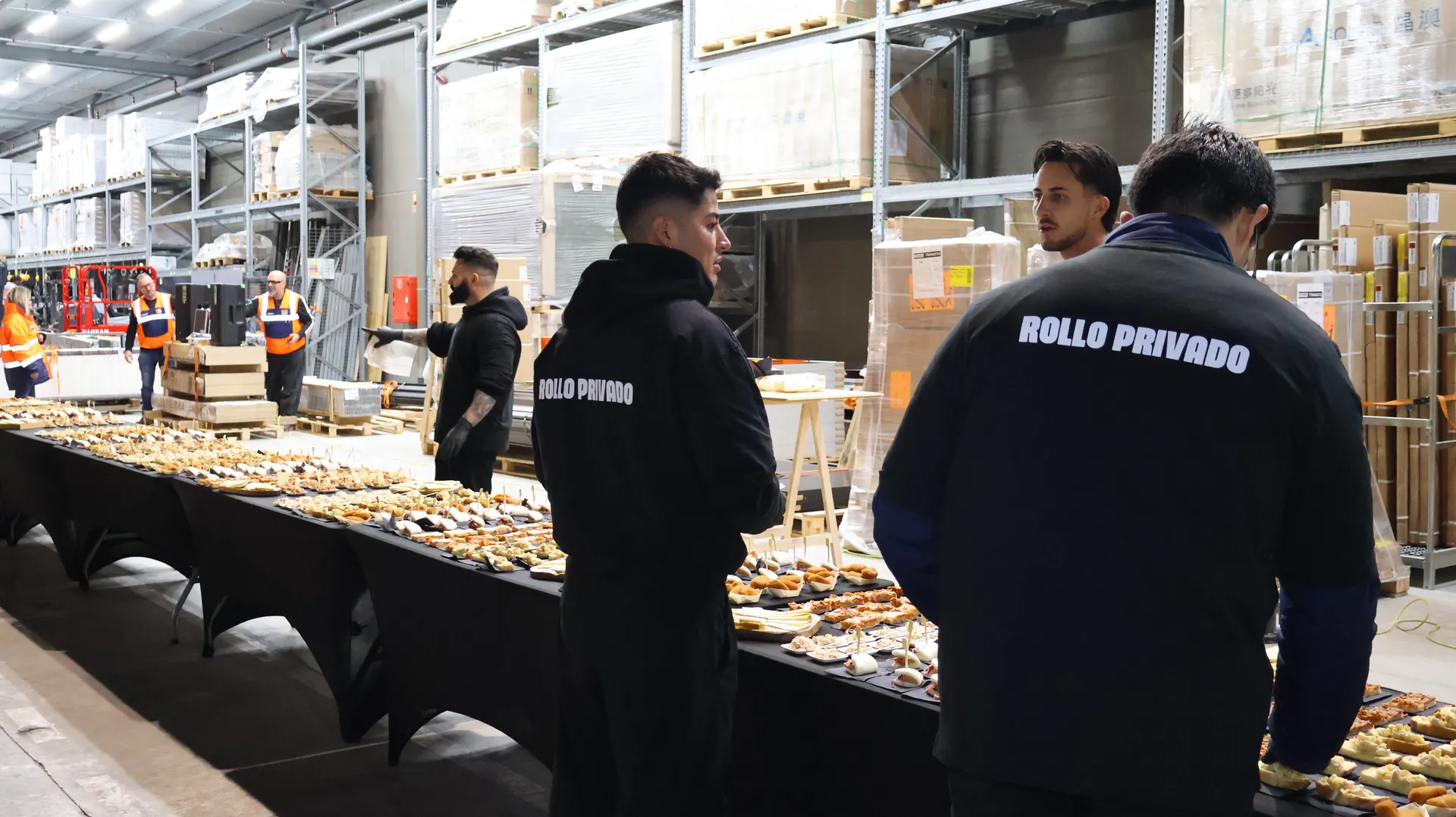
Coffee break, breakfast or lunch: three different jobs
A coffee break is a pause within a working day: guests have something to eat or drink, talk and return to the programme. If the event starts early and people arrive without breakfast, the food plays a bigger role. If it finishes at lunchtime, a tray of pastries is not a replacement for lunch.
Before choosing food, establish which moment you are covering and how many minutes people actually have to eat. Training for twenty colleagues and a presentation with a hundred simultaneous departures require different layouts even with the same menu. Mention if speakers need to return before everyone else.
| When | Purpose | What to plan |
|---|---|---|
| Morning arrival | Breakfast and registration | More time and substantial choices |
| Between sessions | Refreshments and conversation | Fast service and easy-to-eat food |
| End of a morning programme | Provide a meal | Consider lunch or cocktail catering, not simply more coffee |
What to include in a coffee break menu
Build the menu from adjustable blocks: coffee and tea, water, something sweet, something savoury and fruit. You do not need a table crowded with different recipes. A short selection that is replenished properly works better than numerous trays that are hard to identify or eat while talking.
One combination to discuss is a small pastry, a mini sandwich or savoury bite, and a portion of fruit. These are menu ideas, not a fixed Rollo Privado package. Confirm availability, preparation, sizes and alternatives before announcing the menu. Avoid food with dripping sauces if guests will have few tables available.
Hot drinks
Agree coffee, decaffeinated coffee, teas, milk and any required alternatives, as well as how they will be served.
Water
Make it visible and easy to replenish without crossing the coffee queue.
Sweet and savoury
Balance the selection around the time of day and what guests have already eaten.
Fruit
Choose a presentation that suits the available time and space.
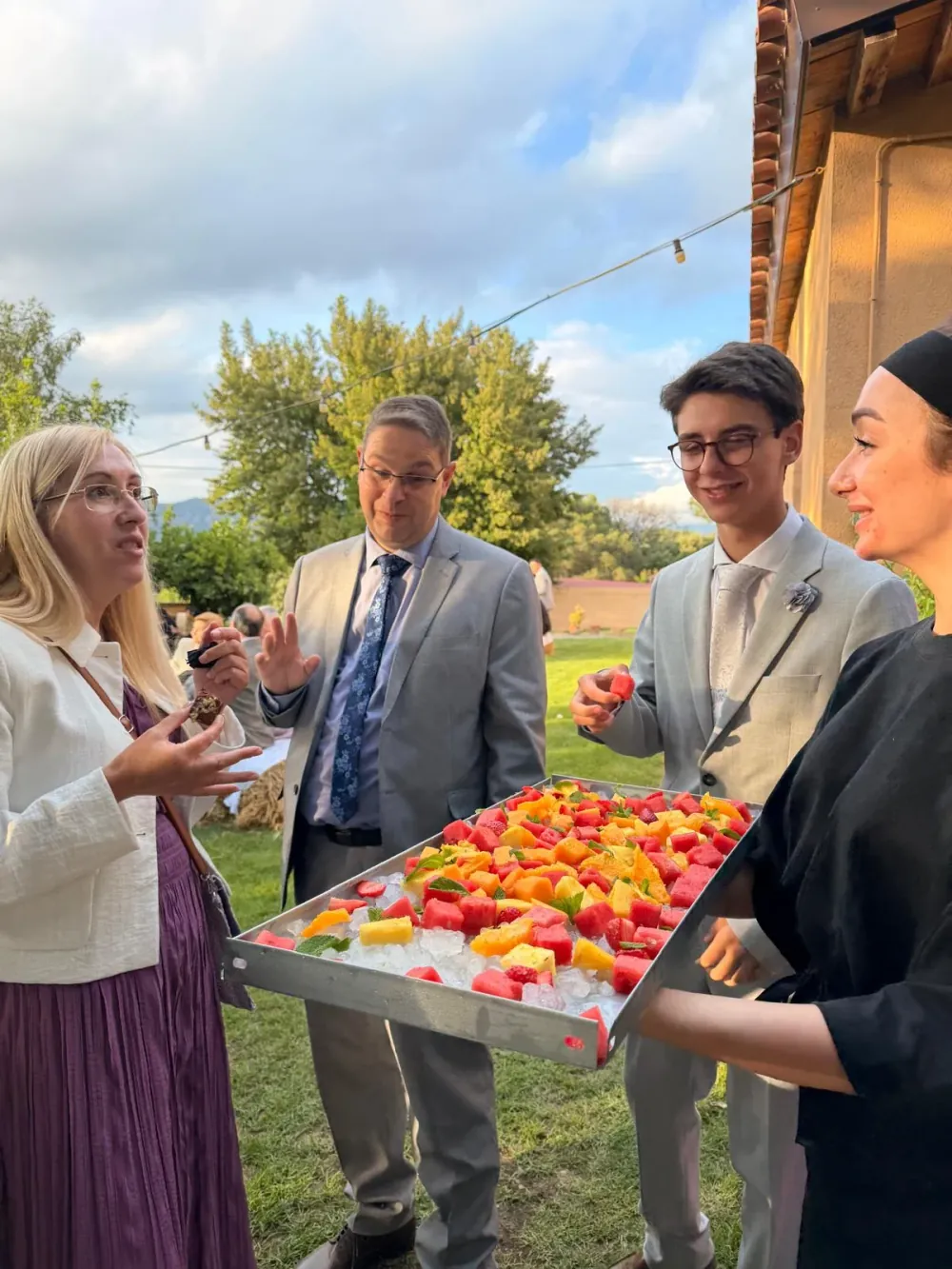
Sample quantities for 30 or 50 attendees
For an initial enquiry, you could use one sweet item, one savoury item and one fruit portion per attendee as an example. This is not a universal serving: it changes for a complete breakfast, a short pause or an event close to another meal. Specify the size of each item to make the numbers meaningful.
Calculate drinks separately. Ask how coffee and tea demand will be split, whether second servings are included and how long replenishment continues. Counting one cup per person does not resolve preparation, water, milk or machine capacity on its own. Agree the practical plan with the team providing the service.
| Attendees | Sweet pieces | Savoury pieces | Fruit portions |
|---|---|---|---|
| 30 | 30 | 30 | 30 |
| 50 | 50 | 50 | 50 |
An assumption for requesting a proposal, not a contracted menu. Drinks, replenishment, sizes and individual requirements must be agreed separately.
Fit the break into the agenda without extending it
Setup should be finished before the first attendee leaves the meeting room. For a twenty-minute break, focus more on serving capacity than adding coffee varieties. If everyone has to spend time ordering or waiting for a drink, meaningful conversation gets squeezed into the final few minutes.
This timetable illustrates coordination, not a guaranteed setup duration. Agree access, preparation and removal with the supplier and venue manager. If a speaker runs over, nominate one person to relay the revised start time so that the service does not open while everyone is still in the session.
Setup and checks
Tables, drinks, menu information and circulation routes ready after the agreed preparation time.
Session ends
Open the planned service points and manage the group's simultaneous arrival.
Replenishment
Check drinks, food, used tableware and access to reserved dietary options.
Return to the programme
Coordinate removal without noise beside the meeting room or blocked access.
Setting up in an office, training room or hired venue
In Barcelona, access arrangements can affect service as much as the menu: loading times, lifts, reception, distance from the vehicle and building permissions. Confirm these details before finalising the proposal. An empty table does not automatically provide a suitable working area for preparing hot drinks.
Check electrical outlets and capacity with the venue and catering team rather than assuming any socket will do. Where possible, separate drinks from food so that one queue does not block everything. Provide a clear place for used cups and comfortable circulation, including for attendees with reduced mobility.

Allergies and a checklist for comparable quotes
Ask about dietary requirements before fixing the menu and share them with the caterer through the agreed channel. A plant-based drink does not make the whole service suitable for an allergy, and a gluten-free product still requires a discussion about preparation and handling. Confirm which requirements can be accommodated and how the relevant food will be identified.
Request separate details for food, drinks, transport, staff, tables, tableware, setup, removal and taxes. Clarify whether the proposal covers delivery only or attended service and replenishment. Do not apply a cocktail or full-meal price to a coffee break: these formats have different components and practical requirements.
- Date, address and the venue's responsible contact
- Attendance and exact break time
- Earlier and later agenda: breakfast beforehand or lunch afterwards?
- Sweet items, savoury items, fruit, drinks and planned sizes
- Dietary requirements and identification arrangements
- Access, power points, tables and clear-up
- Price inclusions and the final attendance deadline
FAQ
Frequently asked questions
01How much does a corporate coffee break cost in Barcelona?
The price depends on the selection, attendance, duration, setup and staffing. Request a specific quote; a cocktail catering rate cannot automatically be used to price a coffee break.
02How long should a coffee break last?
A 15-30 minute pause is a useful starting point for the agenda. Group size and service speed determine whether that allows people to enjoy refreshments without rushing.
03Does a coffee break need waiting staff?
It depends on the format. Prepared delivery and attended service provide different things. Agree who makes drinks, replenishes food, answers questions and removes the equipment.
04What should I send when enquiring?
Include the date, address, attendance, timing, type of event, dietary requirements and photographs of the space. Mention available tables, water and power so the team can assess the setup.