

An aperitif reception and a cocktail dinner are different briefs
Before choosing dishes, clarify what the service is meant to provide. A short toast after work can be accompanied by a few bites. An invitation for eight in the evening that announces dinner needs to cover a full meal. Piece size, duration, timing and a main preparation all change the proposal, even if both occasions are called cocktail receptions.
Make that clear in the invitation too. If some guests have already eaten while others expect a full dinner, calculating food becomes less useful. Do not choose quantities from a photograph of trays or the number of menu items: twelve tiny preparations and twelve generous portions are different things. Ask for an explanation of pieces, sizes, courses and replenishment.
Work out canapés per person for your receptionFive moments to build a Christmas menu around
A simple structure allows variety without accumulating similar dishes. Start with something easy to pick up on arrival, alternate temperatures and reserve a more substantial preparation for the middle. A sweet finish then signals the end of the meal. Guests who want to keep talking no longer have to guess whether another course is coming.
The following ideas are starting points for discussing a proposal with your caterer, rather than a fixed menu or guaranteed dishes. A festive touch can come from an ingredient, texture or presentation. Every bite does not need to be a Christmas recipe, and every course does not need an intense flavour.
| Moment | Composition idea | Service consideration |
|---|---|---|
| Welcome | A fresh bite and a drink | Easy to eat while greeting colleagues |
| Contrast | A crisp bite and a vegetable preparation | Vary texture and offer choices from the start |
| Hot course | A small preparation with mushrooms or seasonal vegetables | Serve without interrupting a long conversation |
| Centre of dinner | Live preparation or a main portion | Agree portion size, table support and serving pace |
| Sweet finish | A small dessert with a festive touch | Clearly mark the end of savoury service |
Illustrative composition. Ingredients, dishes and alternatives are confirmed in the event proposal.
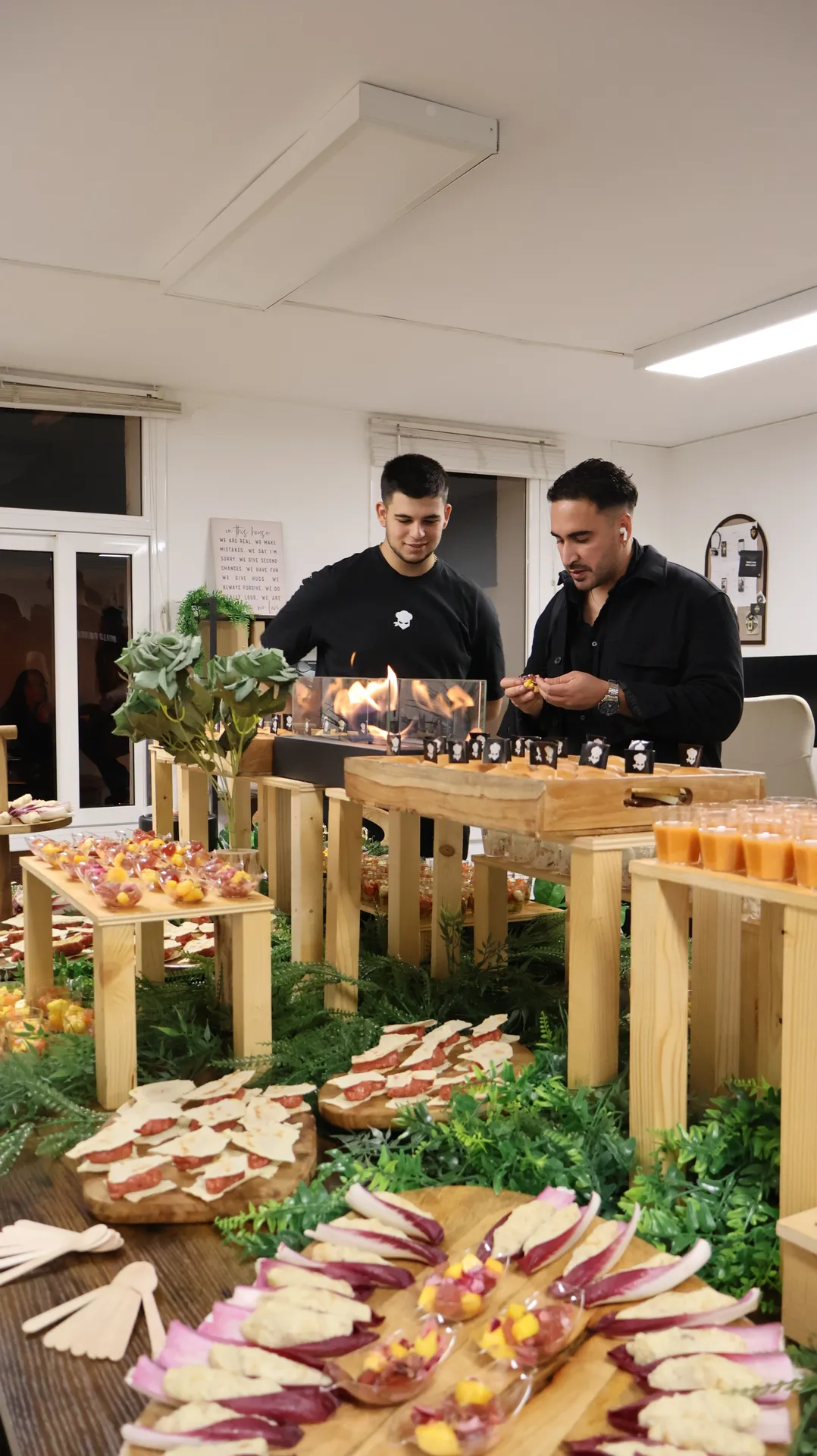
Bite ideas: variety that guests can actually taste
Think in recognisable contrasts: a fresh vegetable preparation beside a hot dish, or something creamy followed by something crisp. Ideas to discuss with the kitchen include a small pumpkin soup, a mushroom bite, a fish preparation or a meat dish. The aim is not to include everything, but to create a selection that makes sense together.
Try the test of a guest holding a glass in one hand. A bite with too much sauce, a container that is awkward to empty or a piece needing several cuts may require a table and cutlery. For a standing celebration, choose convenient presentation and keep seats and support tables available. Ease of eating belongs in menu planning, rather than being an afterthought.
Avoid repeating one profile
Several bread-based bites with different fillings can offer less variety than a shorter selection of temperatures and textures.
Give the vegetable option substance
Plan a complete preparation that fits the sequence rather than removing ingredients at the last minute.
Reserve a centrepiece
A main course gives dinner structure without relying entirely on small bites.
Trays, buffet or live cooking: avoiding one long queue
With circulating trays, ask how food will reach every area and who will check that a group does not miss a course. With a buffet, review access and replenishment. An attractive station loses some of its purpose if the whole team gathers in front of it and blocks the way to drinks.
Combining a circulating welcome with a central preparation can spread movement around the room. Live cooking techniques must suit the venue, with installation and ventilation conditions reviewed beforehand. If there is a speech, agree when to pause or resume service. The main course should not arrive just as guests need to face a stage and applaud.

Dietary alternatives and drinks from the first round
Collect requirements before approving the proposal. A guest with an alternative menu should know whom to approach and how their courses will arrive. Confirm ingredients, handling and practical options with the caterer; a generic label does not resolve allergen questions. Keep one current version of the information for both the organiser and serving team.
For drinks, define what is included on arrival, what is served during dinner and when service ends. Give alcohol-free choices and access to water the same attention. If a bar follows the meal, ask for its scope separately: duration, staffing, consumption, ice and glassware can change the comparison between quotes.
Understand the items in a catering proposalFAQ
Frequently asked questions
01Can a cocktail menu replace dinner?
Yes, if food and service are planned for a complete meal. Agree sizes, quantities, duration and a main preparation, rather than simply counting menu items.
02How many canapés are needed per person?
That depends on whether they are an aperitif or a meal, their size and the other courses. Calculate for the specific menu rather than copying a quantity from another event.
03Should everything be served at once?
A sequence can help maintain temperature and distribute service. The choice between trays, stations and courses depends on the venue and programme.
04Are these ideas Rollo Privado's Christmas menu?
They are examples to guide your choice. The individual proposal confirms dishes, ingredients, alternatives and conditions for each event.