

Start with the celebration, not a list of dishes
Before deciding what food to serve at an adult birthday, define four things: start time, venue, guest count and desired formality. A long garden lunch has different needs from an afternoon party in a flat or a terrace dinner with music.
The guest mix matters. If friends do not know one another, a format that allows movement makes introductions easier. At a family gathering, sitting down or sharing a central dish may work. When generations mix, offer different rhythms and places to sit without splitting the occasion into disconnected menus.
Then consider what you want to do. If being present with guests is the priority, the menu should remove tasks during the party: dishes cooked by the team, circulated service or a central preparation that does not rely on the host moving in and out of the kitchen.
Four food formats that work for adult birthdays
Every format changes how guests relate. Circulated cocktail catering keeps the space open and lets people eat without leaving a conversation. Live cooking creates a focus. Live paella gathers the group around a recognisable moment. A sharing table encourages people to settle in and extends the conversation.
You do not need to choose only one. A cocktail welcome can lead to rice, and an informal table can include a live-fire station. Avoid duplicating food and staff without a clear purpose. A combined format needs an intuitive transition that guests understand without instructions.
| Format | Ideal for | Main requirement |
|---|---|---|
| Circulated cocktail | Flats, terraces and groups that want to talk | Standing surfaces and a consistent tray rhythm |
| Live cooking | Parties looking for an informal visual moment | A safe zone, power or fuel and clear sightlines |
| Live paella | Gardens, courtyards and lunches with a central dish | Stable surface, access and a defined serving time |
| Sharing table | Groups that prefer to sit and linger | Seating, table space and replenishment |
The final choice depends on access, timing, guest count and facilities. Two formats can be combined when each has a distinct purpose.
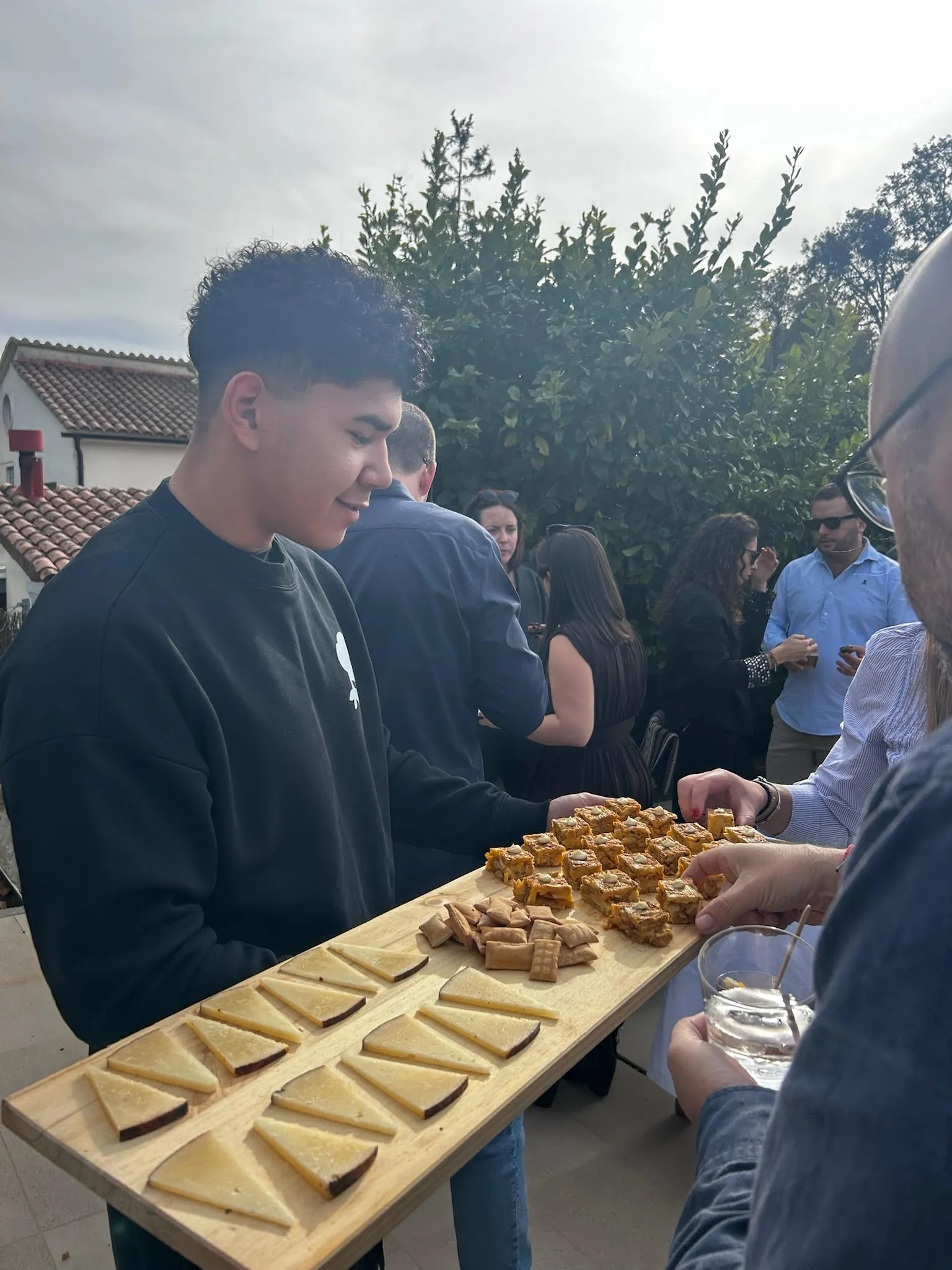
Food ideas that support conversation
At adult birthdays, dishes that take one or two bites, hold their texture and do not require a knife tend to work well. Think in categories rather than isolated recipes: something fresh, a crisp piece, a considered plant-based option, a deeper-flavoured bite and one hot preparation cooked to order.
Depending on the venue, live cooking can add contrast through a plancha, grill, wok or rice dish. As well as serving hot food, it brings aroma and movement. It should not block the only terrace route or concentrate smoke near tables, neighbours or fabrics.
At lunchtime, the central dish can carry more weight. In the afternoon, a savoury tea can develop towards something hot. At night, a progressive cocktail leaves room for music and drinks. Quantities should reflect duration, time and whether the service replaces a full meal.
Avoid fragile dishes that need to wait, sauces that are awkward when standing and too much repetition of fried or pastry items. Abundance comes from smooth replenishment, genuine variety and a clear finish, not from filling the whole table at the start.
Something fresh
Adds lightness and opens the appetite, especially by day or in summer.
Something crisp
Changes texture and is easy to enjoy in cocktail format.
A plant-based option with identity
It should feel integral to the menu, not like a late substitute.
A hot preparation
Marks a change of pace and can be cooked in view.
A more substantial bite
Helps cocktail catering work as a complete meal.
A proportionate sweet finish
Coordinates with cake, the toast and what follows.
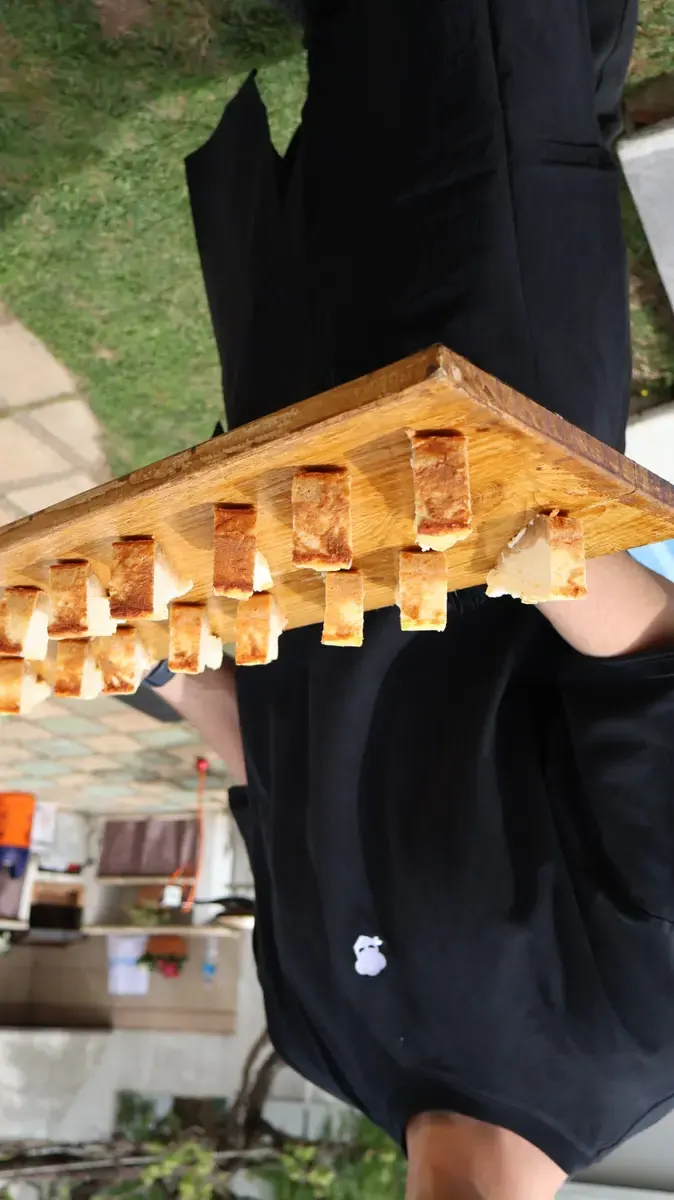
Celebrating at home, on a terrace or in a garden without turning it into a kitchen
You do not need a professional kitchen for at-home catering. You do need to review access, stairs or lift, unloading distance, water, power and the surface where the team will work. Clear photos or a short video reveal much of the required setup.
Where possible, separate production from the main guest route. Staff need to store clean equipment, remove used trays and manage waste without continually crossing the party. In a small venue, discreet planning is more valuable than a spectacular station in the wrong place.
Outdoors, the rain, wind or heat plan is part of the event. An improvised gazebo may not protect fire, electrical equipment or every guest. Consider noise, smoke, neighbour rules, toilet access and agreed clear-up so the host is not left with a second event after the party.
- Loading access, parking, lift, stairs and door width
- Water, electrical capacity, lighting and a stable cooking surface
- Protected space for clean, used, chilled equipment and waste
- Crew circulation without blocking guests, toilets or exits
- A genuine alternative for rain, wind, heat or cold
- Neighbour, noise, smoke, fire and collection-time rules
Dietary needs, allergens, ages and drinks for a varied group
Ask for allergies and dietary requirements in advance and centralise responses. A preference, an intolerance and an allergy with trace risk are not the same. Accurate information makes it possible to design alternatives that follow the same sequence and to organise identification.
If older guests attend, reserve seating, consider difficult textures and make sure circulated service reaches them. If children attend too, you do not need a separate party: integrate familiar options, adjust timing and avoid serving all children’s food far earlier or later.
Calculate drinks around season, duration and style. Visible water from arrival, properly designed alcohol-free choices and a proportionate amount of wine, beer or cocktails let everyone find their own pace. If there is a bar, confirm who serves it, its duration, inclusions and whether glass is suitable near a pool or garden.
One reliable list
Review each name, requirement and severity before confirming guest numbers.
Identifiable service
Kitchen and waiting teams know the alternatives and who should receive them.
Comfort across ages
Seating, timing and textures adapt without fragmenting the gathering.
Drinks from arrival
Water and alcohol-free options receive equal attention.
What to share for a proposal that genuinely fits
A useful enquiry includes date, municipality, timings, approximate adults and children, venue type and the format you imagine. Add photos of access and the working area, available facilities, restrictions and whether you already have tables, crockery or drinks.
Describe the atmosphere as well: relaxed lunch, afternoon party, dinner with music or a surprise. State whether you need live cooking, waiting staff, tableware, bar, setup and removal. The quote can then separate concepts clearly.
You do not need to choose every recipe first. Prioritise two or three things —freedom to move, rice cooked live and strong plant-based choices, for example— and let the proposal solve quantities, sequence and crew. If guest count is a range, say so and agree when the final number is due.
- Date, location, start time and approximate duration
- Number of adults and children, with a range if still open
- Home, terrace, garden or hired venue and its access
- Celebration style and level of formality
- Diets, allergies, drinks and birthday cake
- Staff, equipment, setup, clear-up and budget guidance
FAQ
Adult birthday food questions
01What food should I serve at an adult birthday?
Combine an immediate welcome, cold and hot bites, a strong plant-based option, a central moment such as live cooking or paella and a sweet finish coordinated with the cake.
02Which format works best for a party at home?
Circulated cocktail catering suits limited furniture; sharing tables need seating; paella and live cooking require a stable, safe work area.
03How much food should I allow per person?
There is no universal figure. It depends on whether catering replaces a full meal, duration, time, type of pieces and whether a main dish is included.
04Can catering work without a professional kitchen?
Yes. Mobile cooking works at homes and gardens after checking access, water, electricity, surface, ventilation and a weather alternative.
05How should I plan for allergies or vegetarian guests?
Gather details early, distinguish allergies from preferences and request equivalent, identifiable alternatives. Trace concerns must be discussed explicitly.
06What information do I need for a quote?
Date, location, timing, guests, venue photos, preferred format, dietary needs, drinks, available equipment and the services you want included.