
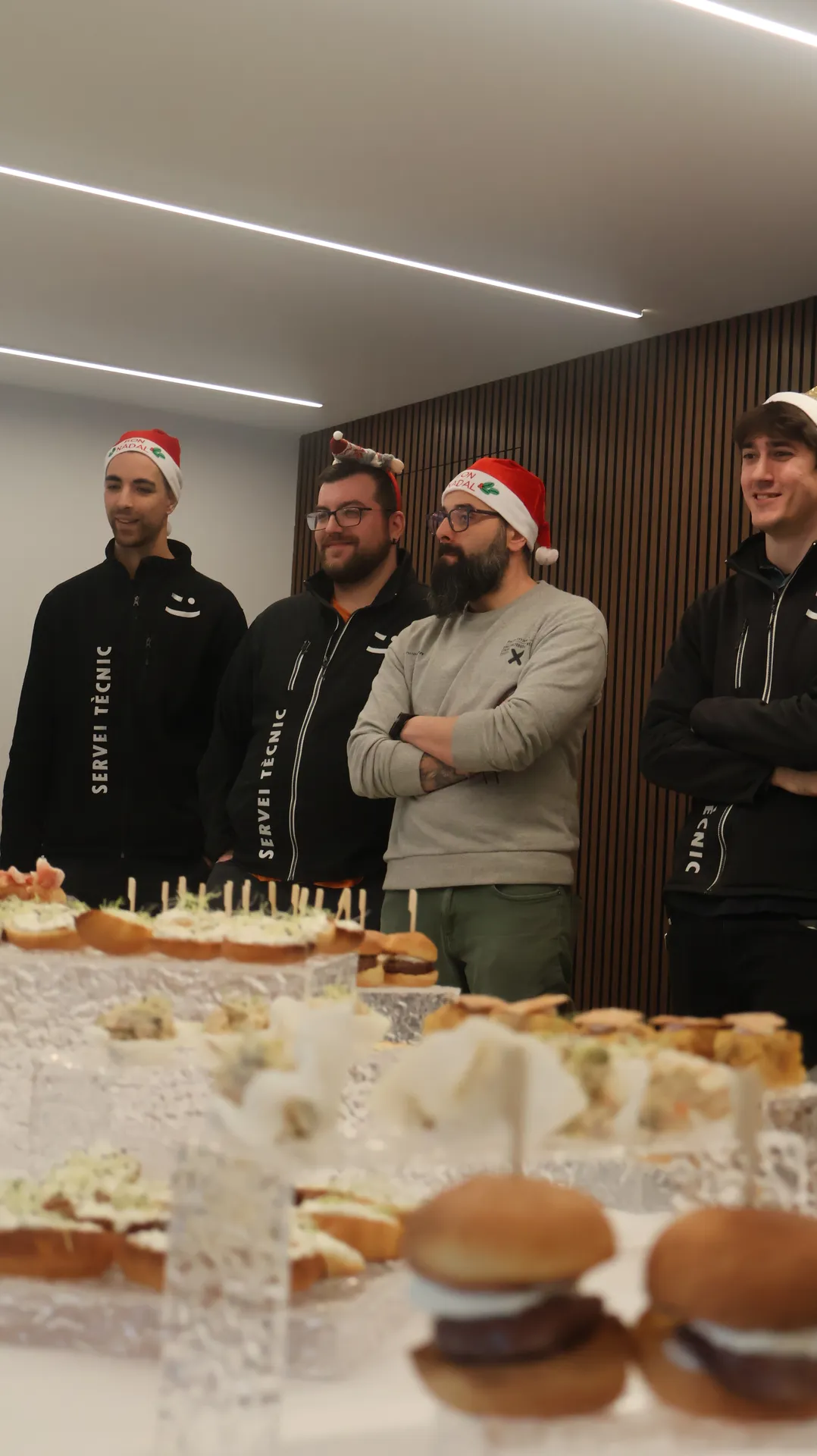
Before the menu: what should the Christmas dinner achieve?
A company Christmas dinner can thank people for the year, bring together departments that rarely meet or celebrate a milestone. Defining that purpose helps decide everything else. If conversation matters most, avoid a long protocol. If awards or speeches are planned, reserve a moment with good visibility and no kitchen noise.
Consider the group, too. A team that spends all day sitting may welcome a dynamic cocktail format, while a company used to formal occasions may prefer a well-served table. Connection does not require forced activities: an easy welcome, food available quickly and one live-cooking point often create conversation naturally.
The experience begins before the first dish. Arrival, coat storage, welcome drinks, music and the way people occupy the room determine whether guests mix. A good plan connects these elements and removes the waits that cool the atmosphere.
Cocktail, live cooking, buffet or seated dinner: choosing a format
There is no single correct format. Cocktail catering encourages movement and handles staggered arrivals. Live cooking adds a visual focus and makes preparation part of the experience. A well-distributed buffet offers autonomy, while a seated dinner creates a more ceremonial atmosphere.
The decision depends on guest count, venue, available time and tone. In offices or converted industrial spaces, circulated service with one or two cooking points often works well. In a large group, duplicate the most popular points so that one queue does not define the celebration.
| Format | Works best when | Watch out for |
|---|---|---|
| Cocktail | You want movement, conversation and flexibility | Standing surfaces and tray frequency |
| Live cooking | Food should create theatre without a forced activity | Extraction, power, safety and sightlines |
| Buffet | The group values autonomy and variety | Queues, replenishment and crossing routes |
| Seated dinner | There are speeches, awards or a formal tone | Furniture, course timing and waiting staff |
Formats can be combined: a cocktail welcome, a dish cooked live and a sweet finish served at tables or from a station.
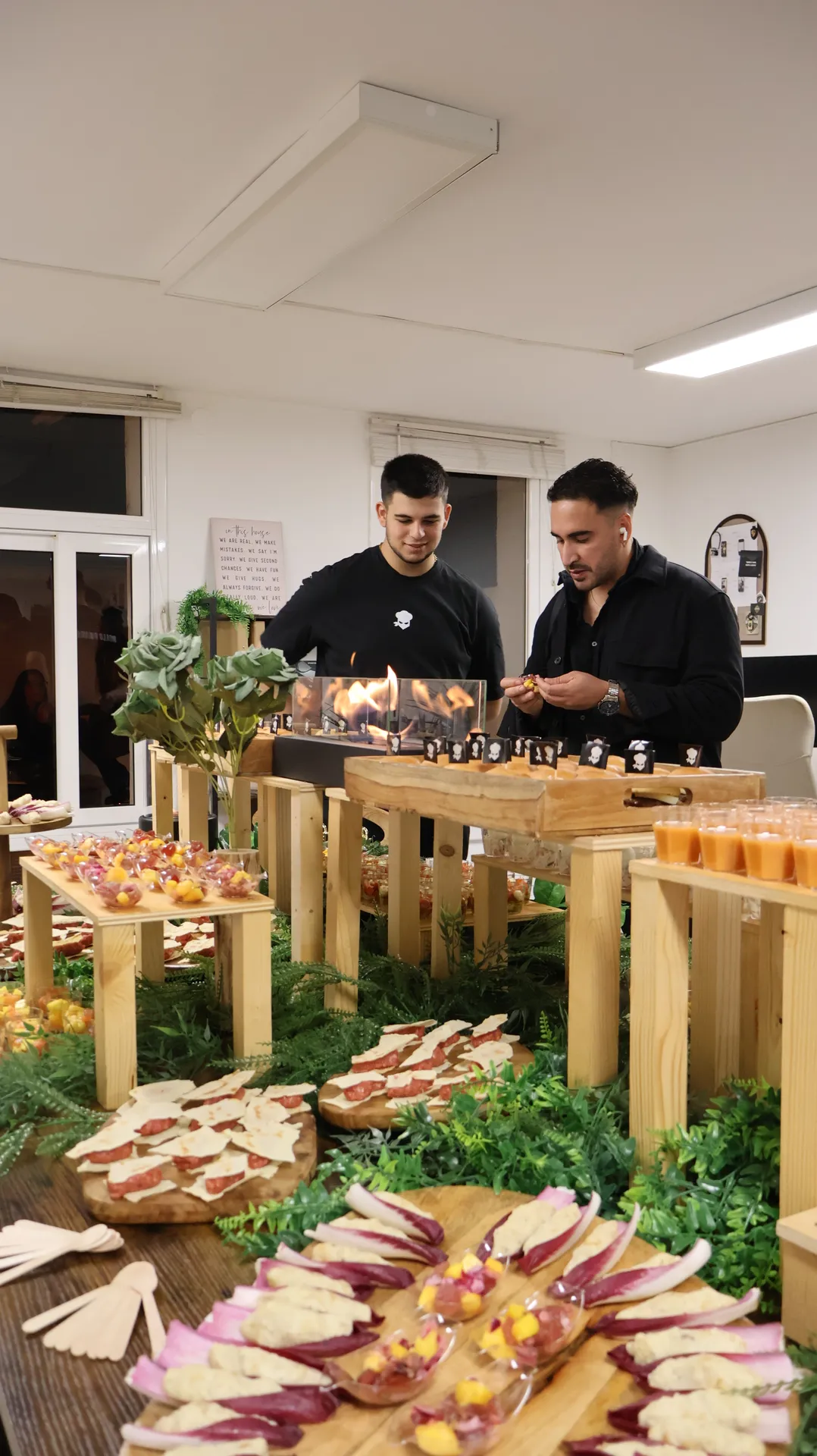
Office, industrial space or external venue: logistics that change the plan
Hosting at the company can save travel and transform an everyday place, but you need to check where cooking happens, how equipment enters and what activity continues nearby. A large room is not automatically operational: power, water, ventilation, protected surfaces and a discreet crew route are still needed.
In an industrial unit or courtyard, check flooring, lighting, temperature, toilets and accessibility. At an external venue, confirm what hire includes: kitchen, tables, chairs, crockery, cleaning, security and finish time. Venue and caterer need a clearly identified coordinator.
December adds weather. Even with a favourable forecast, a terrace requires cover or an indoor alternative. The backup plan should not reduce capacity or block emergency exits and service areas.
- Loading access, parking, lift and distance to the event area
- Power, water, ventilation and permission for cooking
- Capacity, toilets, accessibility, coat storage and emergency exits
- Furniture, crockery, glassware, ice, waste and cleaning included
- Rain, wind and cold cover without losing capacity
- Setup, speeches, music, dismantling and venue closing times
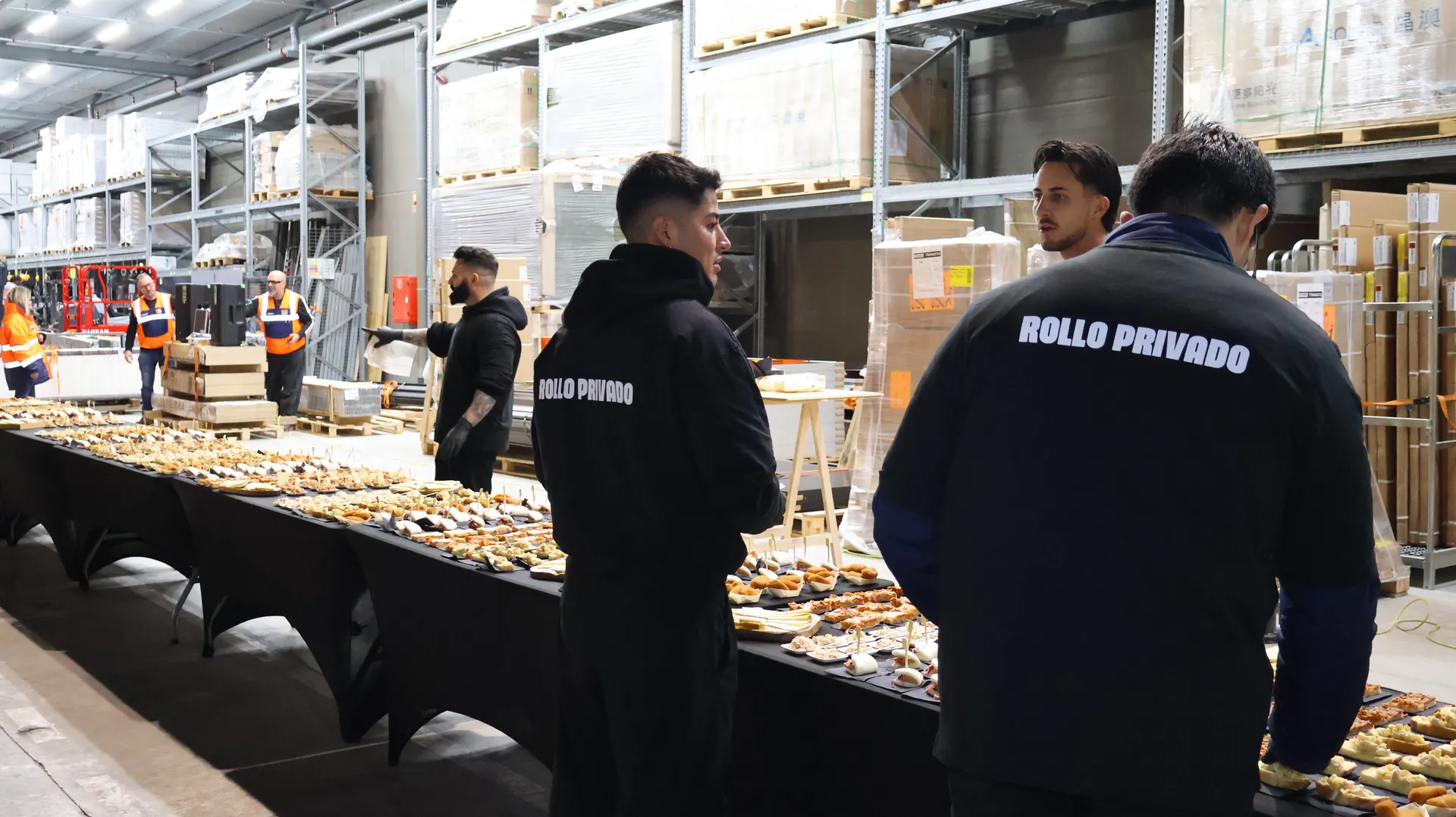
Original ideas without forcing the team to participate
An original experience does not require intrusive games. Live cooking works because each person can approach, ask questions or simply watch. A fire station, a dish finished to order or a large shared preparation creates a common moment without interrupting conversation.
A simple menu narrative can also help: reinterpreted local produce, a journey through techniques or small courses connected to milestones from the year. It should fit in one sentence and remain enjoyable for anyone who ignores the story.
Music, lighting and furniture complete the effect. High tables beside seating, accessible drink points and a volume that allows conversation usually contribute more than excessive decoration. Originality appears when every element tells the same story.
Explore our live-cooking formatsDietary requirements, allergens and drinks from the start
Dietary requirements should not be solved with an improvised plate at the end. Gather information early, separate allergies from preferences and send one organised list. The catering team can design alternatives that follow the menu and decide how to identify and serve them safely.
At a cocktail event, labelling and front-of-house coordination are essential because trays circulate. At a seated dinner, an updated table plan helps. Any material cross-contamination concern must be discussed explicitly because venue and mobile-kitchen conditions affect what can be guaranteed.
Drinks need planning too. Water from arrival, interesting alcohol-free choices and proportionate replenishment improve the experience. If a bar follows, separate its duration, staff, ice, glassware and consumption model from dinner service so quotes are easier to compare.
Set a deadline for details
Collect the guest name, exact need and trace concerns in one reliable list.
Design equivalent alternatives
Every guest should experience the same sequence, not an isolated substitute.
Identify and coordinate
Kitchen, waiting team and company contact should share one version of the data.
Offer credible alcohol-free drinks
They need not be limited to water and generic soft drinks.
What to send in order to receive a useful quote
Give each supplier the same base: date, municipality, approximate guest count, timings, venue and preferred format. Add photos or video of access and the cooking area, available equipment, venue restrictions and the planned schedule.
State what the price should include: food, drinks, chefs and waiting staff, tableware, furniture, transport, setup, dismantling, cleaning, taxes and potential overtime. Our price guide explains why two per-person figures may represent very different services.
If the final count is unknown, share a range and the date when you can confirm it. You do not need a fixed menu either. Explaining the objective, atmosphere and priorities allows a caterer to propose a more coherent format than a simple list of dishes.
- Date, location, time window and estimated guest count
- Venue type, access, facilities and weather plan
- Purpose and tone: informal, recognition, lunch or festive night
- Format preferences, drinks and live-cooking moment
- Allergies, diets and deadline for the final list
- Included services, budget guidance and responsible contact
FAQ
Company Christmas dinner questions
01How far ahead should we book a company Christmas dinner?
December concentrates demand. Start the conversation once you have an approximate date, venue and guest range, even if the final count comes later.
02Which format works best?
Cocktail service encourages conversation, live cooking creates a visual focus, buffet offers autonomy and a seated table suits formal moments. Purpose and venue decide.
03Can catering be set up in our office?
Yes, after checking access, power, water, ventilation, surface protection, waste and crew circulation. Photos or a visit help define mobile equipment.
04How are allergies and vegetarian menus handled?
Details are gathered in advance, coherent alternatives are designed and kitchen and waiting teams coordinate identification. Allergies and possible traces must be stated explicitly.
05What should the quote include?
Menu, quantities, crew and hours, drinks, tableware, furniture, mobile kitchen, transport, setup, removal, cleaning, taxes and change terms.
06Can we combine a cocktail with seated dining?
Yes. A standing welcome followed by a main course or sweet finish at tables can balance movement and ceremony when space and timing are properly planned.