
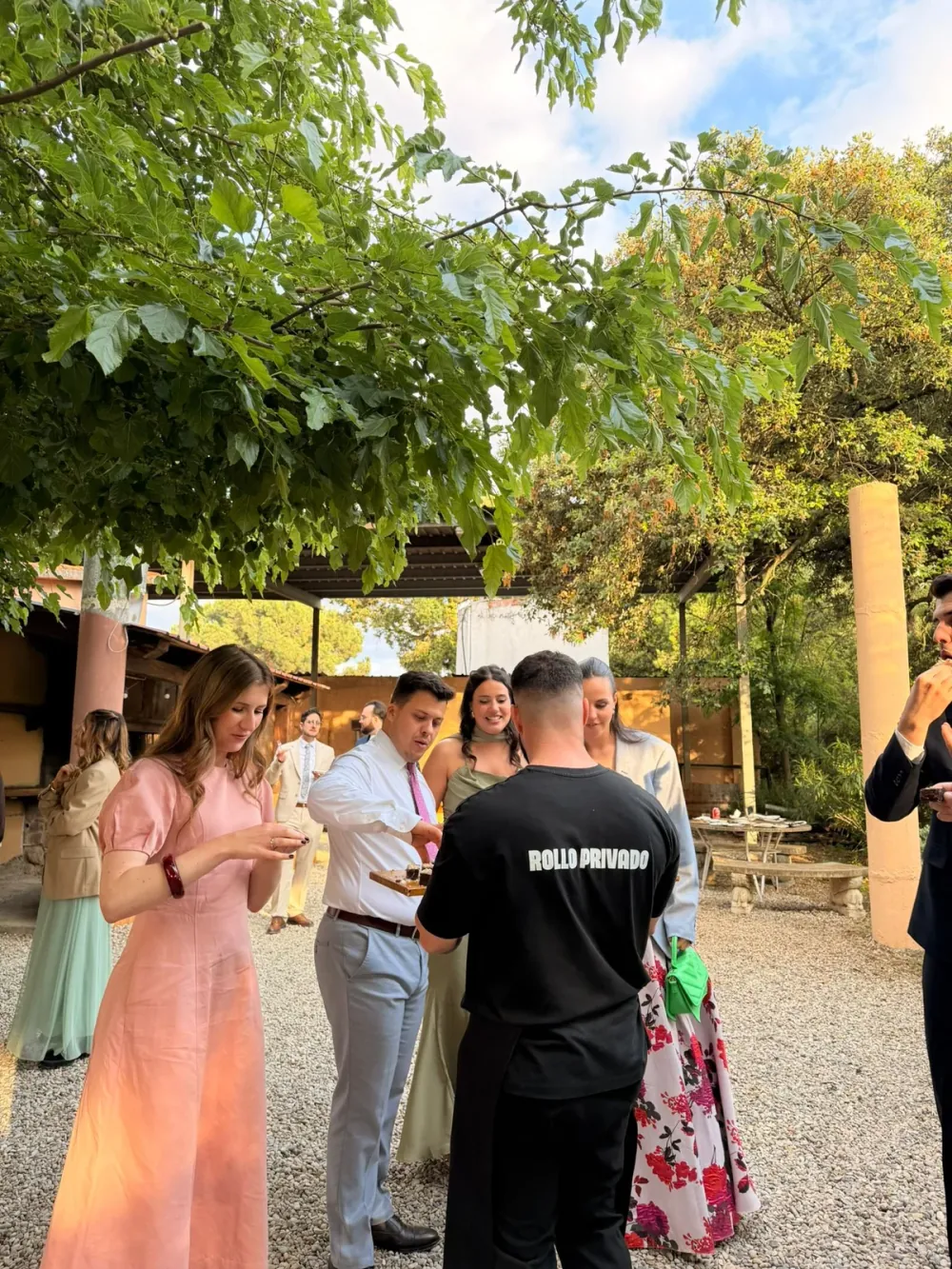
Three formats you can adapt to an intimate wedding
If you want guests to mingle, an attended cocktail reception with small bites and a live-cooking moment may suit the day. If you prefer gathering around one shared dish, paella provides a clear focal point. For a celebration with speeches and more structured timings, consider a seated meal.
No format is always cheaper or better simply because the guest list is short. A long cocktail service can need substantial staffing, while a seated meal adds tables, chairs and tableware. Compare the complete service and guest comfort, rather than choosing from a list of dishes alone.
| Format | Choose it for | What to check |
|---|---|---|
| Attended cocktail reception | Conversation and movement | Enough food, seating and tray routes |
| Appetisers followed by paella | A shared central moment | Rice timing, cooking area and portions |
| Seated menu | A meal with defined timings | Tables, courses, speeches and waiting staff |
Formats depend on the venue and agreed menu. This comparison does not establish a price or confirm availability.
What changes between 20, 30 and 50 guests?
For 20 guests, a focused plan often helps: a short welcome reception, a main course and a sweet finish can give the day its structure. Spreading a small group across too many stations may dilute the atmosphere and add equipment that sees little use.
For 30 people, think about how the reception connects to the meal. If the venue has several separate corners, staff need to know where each group is. With 50, look more closely at drink points, circulation between tables and replenishment. This is a change in coordination, not an automatic requirement for a bigger menu.
Count adults and children separately and note seating and accessibility needs. An informal wedding does not mean everyone can stand comfortably for two hours. Choose furniture for your actual guests rather than copying a reference photograph.
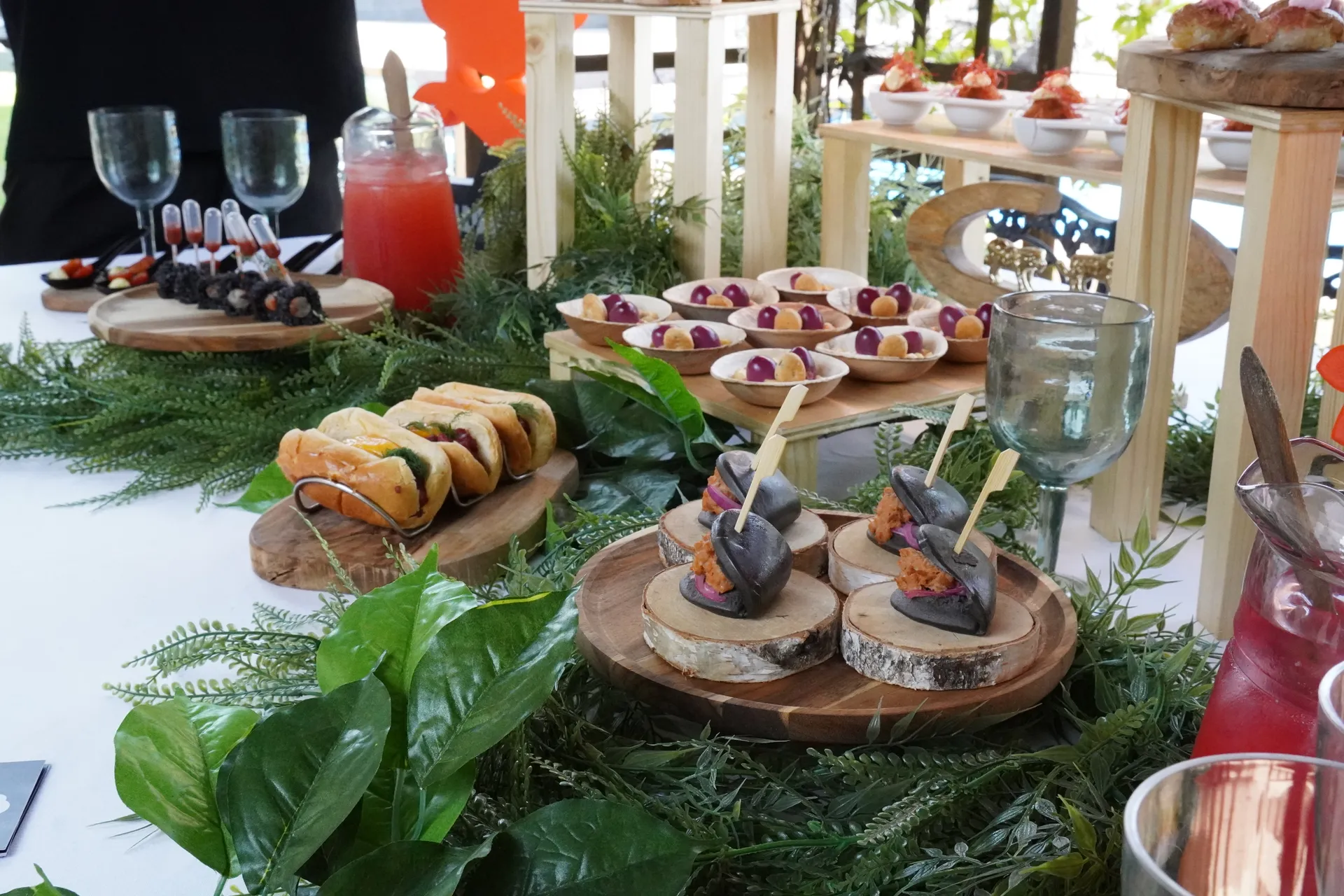
Build the menu without counting the same meal twice
First decide which part of the day provides the main meal. If paella follows, the welcome bites are appetisers. If all the food is served as a cocktail reception, design a fuller sequence with substantial items. Do not add a long reception, several stations and a main course independently without checking the overall quantity.
For an appetiser-and-rice proposal, you might ask for several lighter bites, a main course and dessert. For a full cocktail meal, combine cold and warm pieces with a sweet finish and a clear quantity breakdown. These are starting ideas for the kitchen discussion; recipes, alternatives and portions belong in the final proposal.
Also agree who serves the cake if it comes from another supplier, when it arrives and what equipment it requires. These small details affect the last part of the meal and should have a named person responsible for them.
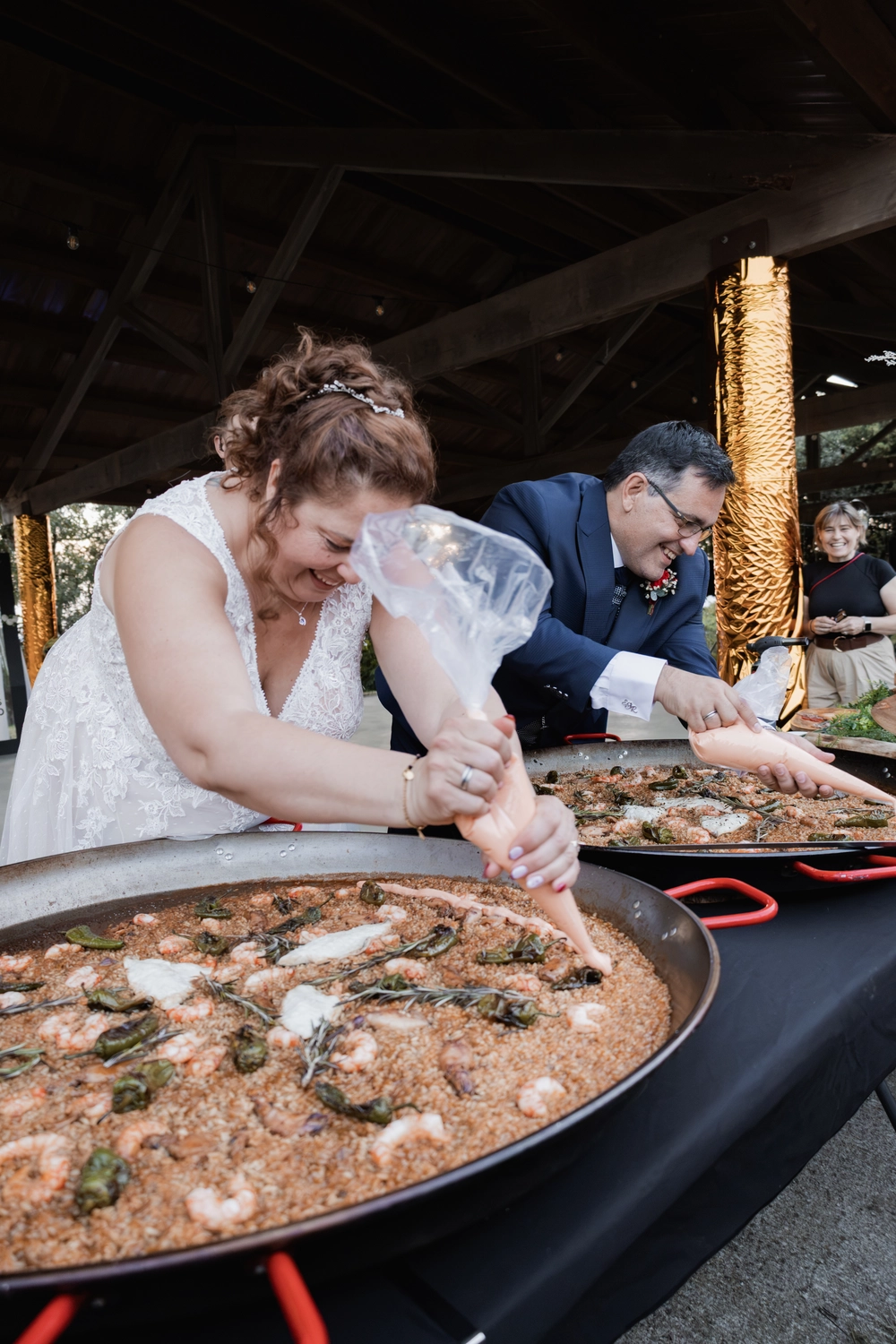
A sample timetable for a lunchtime wedding
Share one schedule with the caterer, venue and other suppliers. Include both guest-facing moments and working times: team access, setup, preparation, service and removal. The kitchen needs to know when the ceremony ends, not simply what time the wedding begins.
This example places the main meal after a short reception. Move it into the afternoon or extend individual parts if you wish, while checking the effect on food, staffing and venue use. It is not a fixed programme or a promise that every setup can be completed in the same time.
Setup and checks
Supplier access, furniture, working area and weather backup ready within the agreed preparation schedule.
Welcome and appetisers
Receive guests, offer drinks and start the planned canapé service.
Main meal
Serve paella or the agreed menu, avoiding a clash with long speeches.
Dessert and conversation
Coordinate cake, coffee and the transition to the next part of the celebration.
Agreed clear-up
Confirm the finish time, equipment removal and the venue's responsible contact.
Garden, private home or masia: the backup needs space too
With a small wedding it may seem easy to move everything indoors if it rains, but check that guests, furniture and staff actually fit. A workable alternative retains a service route and an appropriate cooking area. A small canopy over a buffet does not solve the needs of the whole event.
Before confirming live cooking, discuss access, ventilation, water, electricity and venue conditions with the team. Share any restrictions on flames, noise or operating hours from the start. For a wedding at home, send photographs of the entrance and proposed working area, not only the decorated garden.
Planning catering at a private home or villaThe checklist that makes a quote useful
The quote should distinguish food, drinks, staffing, hours, tableware, furniture, transport, setup, clear-up and taxes. State what the venue supplies and what each supplier is responsible for, so you neither pay twice for the same equipment nor discover missing glasses or chairs later.
Collect allergies and intolerances before finalising the menu and ask the team to confirm which requirements it can accommodate. Do not assume a vegetarian alternative covers other dietary needs. Ask how those preparations will be identified and served, and who will be the contact during the wedding.
Finally, agree the attendance deadline, how changes are handled and what happens if the celebration runs longer. At an intimate wedding, having these answers in writing lets the couple enjoy time with their guests without resolving every practical detail during the day.
- Date, town, address and type of venue
- Adults, children and accessibility requirements
- Preferred format, ceremony time and meal time
- Menu, drinks, dessert or externally supplied cake
- Dietary requirements communicated and confirmed
- Available equipment and items to be supplied
- Weather backup, access and venue conditions
- Inclusions, taxes, changes and additional hours
FAQ
Frequently asked questions
01Does catering make sense for a wedding with 20 guests?
It can, particularly if you want to celebrate at your own venue and hand over cooking and service. Check minimum staffing, setup and travel requirements: a small guest list does not remove those tasks.
02Does a cocktail wedding need less food than a seated meal?
Not automatically. If it replaces the meal, the overall menu must be sufficient. Check sizes, quantities and service pace, and do not confuse it with appetisers before another course.
03Can a small wedding have paella as its main course?
It is a format worth discussing alongside appetisers and dessert. Suitability depends on the cooking area, venue conditions and the agreed service.
04Do guests need seats at a cocktail-style wedding?
Plan places to sit and agree how many seats are needed for the duration and guest list. A standing format should still provide a comfortable alternative for anyone who needs one.